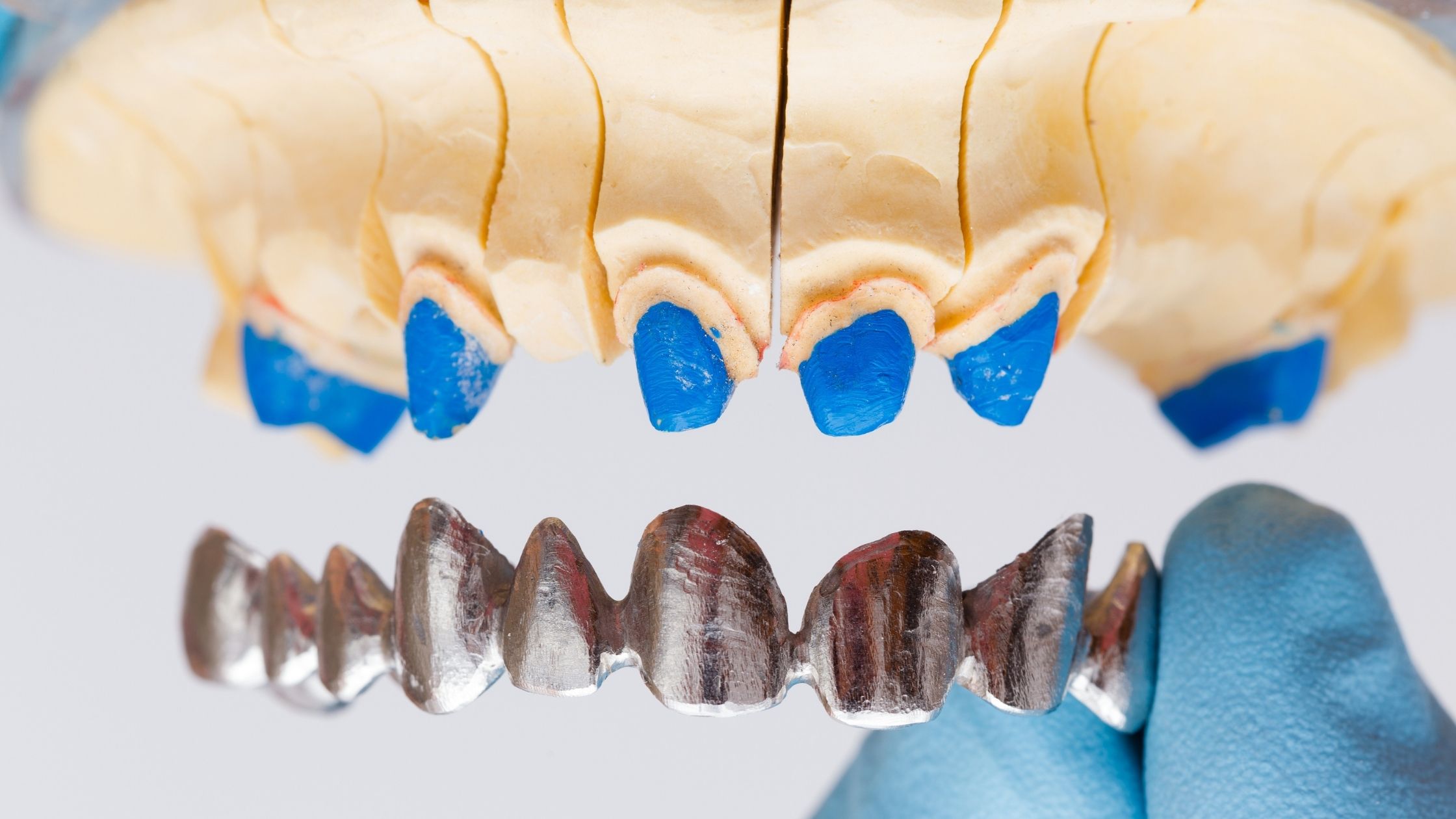
What are Dental Crowns?
The surface of a tooth, covered by enamel, is called a dental crown.
An artificial dental crown is placed to prevent additional damage if a tooth’s surface breaks, chips, or fractures.
The crowns are tooth-colored, gold, silver, or metal caps that fit over damaged teeth to revive their natural function, shape and look.
Crowns protect, cover and restore the shape of teeth when fillings fail to solve the problem.
A dental crown is usually placed after a root canal or a dental implant procedure.
Custom crowns are made by dental technicians to ensure that they blend in with a patient’s surroundings, real teeth.
The best option is decided by a dentist considering the following factors:
- Location and function of the tooth
- The position of the gum tissue and gum line
- Visibility is the tooth when smiling
- The colors and shades of the teeth around
- Signs of clenching or teeth grinding, may determine the material to be used
Several other factors which are important when choosing a crown are Cost, strength & durability.
Your best dentist discusses the various options to help you to figure out which one best meets your needs.
The materials from which dental crown is made can include:
Gold: A combination of copper and other metals, such as nickel or chromium, the main advantage of gold crowns is their strength and durability.
Strong and highly resistant, they last a long time if cared for properly. But due to their color and aesthetics, they don’t make a popular choice.
Metal: Several different types of metals are used in dental crowns, including gold, palladium, nickel, and chromium.
Metal crowns seldom chip or break and last the longest in terms of wear down.
They need only a small amount of the tooth to be removed & can also withstand biting and chewing forces.
Due to their metallic colors, these crowns are a good choice for out-of-sight molars.
Porcelain-fused-to-metal: Having a more natural color, this type of dental crown can be matched to the color of the teeth that are next to the crown.
But sometimes the metal under the crown’s porcelain cap is visible as a dark line. Another drawback is the possibility of the crown’s porcelain portion chipping off.
They are considered to be a good choice for front or back teeth.
All-resin: Made out of resin, these are generally less expensive than other crown types. But they wear down over time and are more inclined to break and chip than the porcelain-fused-to-metal crowns.
All-ceramic or all-porcelain: Providing the best natural color match compared to any other crown type, they are also a good choice if you have metal allergies.
However, they are not as strong as porcelain-fused-to-metal crowns. They are known to be a good choice for front teeth.
Pressed ceramic: Having a hard inner core, pressed ceramic dental crowns to replace the metal liner used in the process of making all-ceramic crowns.
Capped with porcelain, they provide the best natural color match and are also more long-lasting than an all-porcelain crown.
Zirconia: Relatively a new material, Zirconia combines the strength of metal with the aesthetics of porcelain crowns.
Strong and long-lasting, the process can also be less time-consuming because zirconia can be cut and shaped at the same dental office without any need to send them over to a dental lab.
Being metal-free, they are not likely to cause any allergic reactions.
However, their strength can sometimes make the teeth they bite against wear down easily.
Also Read: Restorative Dentistry Options for Broken Tooth
The Procedure of Dental Crowns at Kirkland
The Multi-Day Procedure with a Temporary Crown
One needs to visit the dentist’s office twice with the traditional procedure.
The tooth that needs the crown is examined & prepared. X-rays of the tooth & mold of your tooth or mouth are taken.
A part of the outer layer of the tooth is filed down and removed and an impression of the trimmed tooth and the surrounding teeth is made.
The dentist then puts a temporary crown over the tooth to protect it and the impression is sent to a lab that makes the crown. This step may take some days.
After the crown comes in, the patient is called for a second visit and the dentist cements the crown to the tooth.
Same-Day Procedure at Kirkland Premier Dentistry
The ‘temporary crown step’ can be skipped with this procedure.
Digital pictures of the mouth are taken by the dentist and the crown is created right there in the office using the digital scan from the photos.
There is usually a wait of about 1 to 2 hours until the crown is made.
Once the crown is ready, the dentist cements it into place. Sometimes the patient is also able to head back to work while the crown is being made depending on the particular situation.
All dentists do not have the technology to make same-day crowns.
You will need to ask your dentist at Kirkland about the option and the estimated cost, especially if you don’t have dental insurance.
Cost of Dental Crowns at Kirkland
The cost of the crowns depends on many factors including the material used in the dental crown and the size of the tooth.
All-metal crowns, made of a metal alloy, are usually cheaper than gold or porcelain crowns.
Costs may also vary according to the amount of work the dentist has to perform before putting in the crown.
For example, a root canal or a dental implant may be needed, both of which can push the price up.
It is best to talk to your dentist about the types of crowns available and suitable for your dental needs and also to help determine the dental costs.
At Kirkland Premier Dentistry we have been successfully ‘Crowning’ your smiles and comfort with the latest technology and materials.
Contact for an appointment to find out the costs, procedures, and various options available.