
What is Amalgam- Silver Coloured Fillings

What Is Dental Amalgam?

A dental filling material used to fill cavities caused by tooth decay, Amalgam is a mixture of mercury, silver, copper, tin and zinc used to fill cavities in teeth.

Dental amalgam is approximately 50% elemental mercury, by weight. It is sometimes also called a “silver-filling” because of its appearance.

The procedure of Amalgam Filling

  • The tooth is first drilled by the dentist to remove the decay and then the tooth cavity is shaped for placement of the amalgam filling. 
  • The dentist then, under appropriate safety conditions mixes the encapsulated powdered alloy with the liquid mercury to form an amalgam putty. 
  • The softened amalgam putty is then placed and shaped in the prepared cavity, where it quickly hardens into a solid filling.

What Should I Know Before Getting a Dental Amalgam Filling?

The decision on the dental filling material to be used to treat dental decay is a choice that should be made by the patient and the dentist.

However one should keep in mind the following information about dental amalgam fillings while the options are considered.

Why is Mercury Used in Dental Amalgam?

A dental amalgam filling is approximately half liquid mercury with the other half being a powdered alloy of silver, tin and copper.

Mercury has the unique property of being a liquid at room temperature that helps it to bond well together with the alloy particles together into a strong, durable, and solid filling.

This makes it an essential component of dental amalgam, contributing to its durability.

Is Dental Amalgam Safe?

Minor amounts of mercury in the form of vapour may be released by Dental amalgam fillings. This depends on the number and age of existing fillings plus actions such as tooth grinding & gum chewing.

An increase in exposure to mercury vapour may be experienced when a new amalgam filling is placed or an old filling is removed.

There are no implied health risks related to swallowing small particles of dental amalgam. However, inhaling mercury vapours may be harmful in certain patients.

Usually, slightly higher levels of mercury may be found in the blood or urine of people with numerous dental amalgam fillings.

However, these usually remain within a safe level. According to the studies, people with dental amalgam do not show definitive evidence of dental amalgam causing any harmful health effects.

What are the Main Characteristics of Amalgam Fillings?

Amalgam fillings made of a combination of different metals including silver, tin, copper, and mercury have continued to be used by dentists for a very long time now. The key features of Amalgam fillings are:

  • They are usually the least expensive material for dental fillings.
  • The material of Amalgam fillings is very durable and long-lasting.
  • Their hardening quickly makes the placement faster.

Advantages of Amalgam

  • Being very durable, they can last for over a decade or more with proper care.
  • Their strength makes them suitable to fill large cavities in patients who have a high risk of tooth decay and where moisture makes it difficult for other materials such as resins to establish a bond to the tooth.
  • Their low cost makes them easy on the pocket.
  • Their capability to harden fast can make treatment less stressful, especially for kids or special needs patients.

Also Read: Cheek Biting- What You Need to Know?

Disadvantages of Amalgam Fillings

  • Though the Mercury levels in amalgam are considered safe by ADA, the amalgam filling requires more of the tooth structure to be removed.
  • Patients with metal allergies may have a bad reaction to amalgam, though it’s rare.
  • Amalgam fillings can be visible, even on the back teeth, when you open your mouth wide.
  • Fractures can be caused in Amalgam fillings as they may expand and contract with temperature exposure.

What is Bioaccumulation?

The build-up or gradually increasing concentration of a chemical in organs or tissues in the body is called bioaccumulation.

Mercury from dental amalgam and other sources like fish is known to be bioaccumulative. Most of the mercury from these sources is however eradicated.

But a part of it can amass in the fluids and tissues of the body including the kidneys and brain.

It is imperative to mention here that the detailed studies have proved that enhanced mercury levels and bioaccumulation due to dental amalgam do not result in detectable damage to the target organs. 

Potential Risks of Dental Amalgam

There is no available evidence to date to indicate that exposure to mercury from dental amalgam can lead to negative health effects in the general population.

However, mercury exposure may pose a health risk in the groups of people listed below, as they may be more susceptible to potential negative effects commonly associated with mercury.

  1. Pregnant women and their developing foetuses
  1. Women planning pregnancy.
  1. Women who are nursing their newborns and infants.
  1. Children younger than six years of age.
  1. People with pre-existing neurological disorders.
  1. People with impaired kidney function.
  1. People have heightened sensitivity to mercury or other components used in dental amalgam fillings like silver, copper and tin.

If you’re someone who is in one of the high-risk categories, you can talk to Dr Sheena Gaur at Kirkland Premier Dentistry to discuss your health history, know about the potential effects of amalgam and know about the other available treatments options for fillings.


Should Dental Amalgam Fillings Be Removed?

The removal of a filing that is in good condition and without any decay beneath it is not recommended.

Removing intact amalgam fillings can only lead to unnecessary loss of healthy tooth structure and expose the patient to a temporary increase in mercury vapour released during the removal process.

Dr Sheena Gaur explains that amalgam fillings in anyone, including those considered to be at greater risk like pregnant or nursing mothers and children, should not be removed to prevent any disease or health condition until and unless deemed absolutely necessary because of some medical condition.

If someone has a health situation, teeth sensitivity or allergy to mercury, or suffers from a neurological or kidney disease, the need for removal and replacement should be discussed with the dentist or physician.

Dr Gaur explains that the stability and durability of any tooth restoration depend on numerous factors besides dental filling material.

To ensure that teeth & fillings last as long as possible, one should maintain a healthy diet, proper oral hygiene, and regular dental checkups.

If you think you have encountered negative reactions from treatment with dental amalgam, please book an appointment at Kirkland Premier Dentistry to discuss the issue with Dr Sheena Gaur who has a substantial experience in all kinds of fillings and has been restoring healthy smiles without any adverse health effects in people for many years now!

What are Tooth Coloured Filling- Procedure, Types and Cost

Overview

Dental fillings are one of the most common types of routine dental care to treat dental cavities.

Almost 91% of adults experience at least one cavity in their permanent teeth during their lifetime.

With an elevated demand for dental work of this nature, there have been many developments that offer patients more options to treat tooth decay.

What are Tooth Coloured Fillings?

Tooth coloured fillings are Dental restorations and are an innovative new version of the old, metal fillings.

They are designed to be discreet and natural in appearance as they blend well with the teeth and look more natural than amalgam fillings, which are darker and more easily noticeable. 

They are also known as Composite Fillings as they are made of a composite resin material that can chemically bond to the teeth and they can be utilized to fill and close off a cavity after the decayed part of the tooth has been removed and also to help repair chipped or broken teeth. 

Composite restorations are used to treat the teeth closest to the front of the mouth.

However, the latest advances in technology and the composition of composite fillings have made it possible for dentists to use tooth-coloured fillings on molars too, as they receive more wear than other teeth.

What Is the Procedure for Tooth Coloured Fillings?

First and foremost the dentist discusses the options to decide the filling type best suited for the patient and starts by selecting the shade of composite to use in the filling.

A local anaesthetic is administered in the area to numb the tooth and surrounding areas before the procedure and the decay is then removed usually using a dental drill, leaving a sound and strong tooth structure. 

The cavity is then cleaned, disinfected and dried to prepare it for the filling material to be placed in it.

This step might involve some tooth shaving for severely damaged teeth.

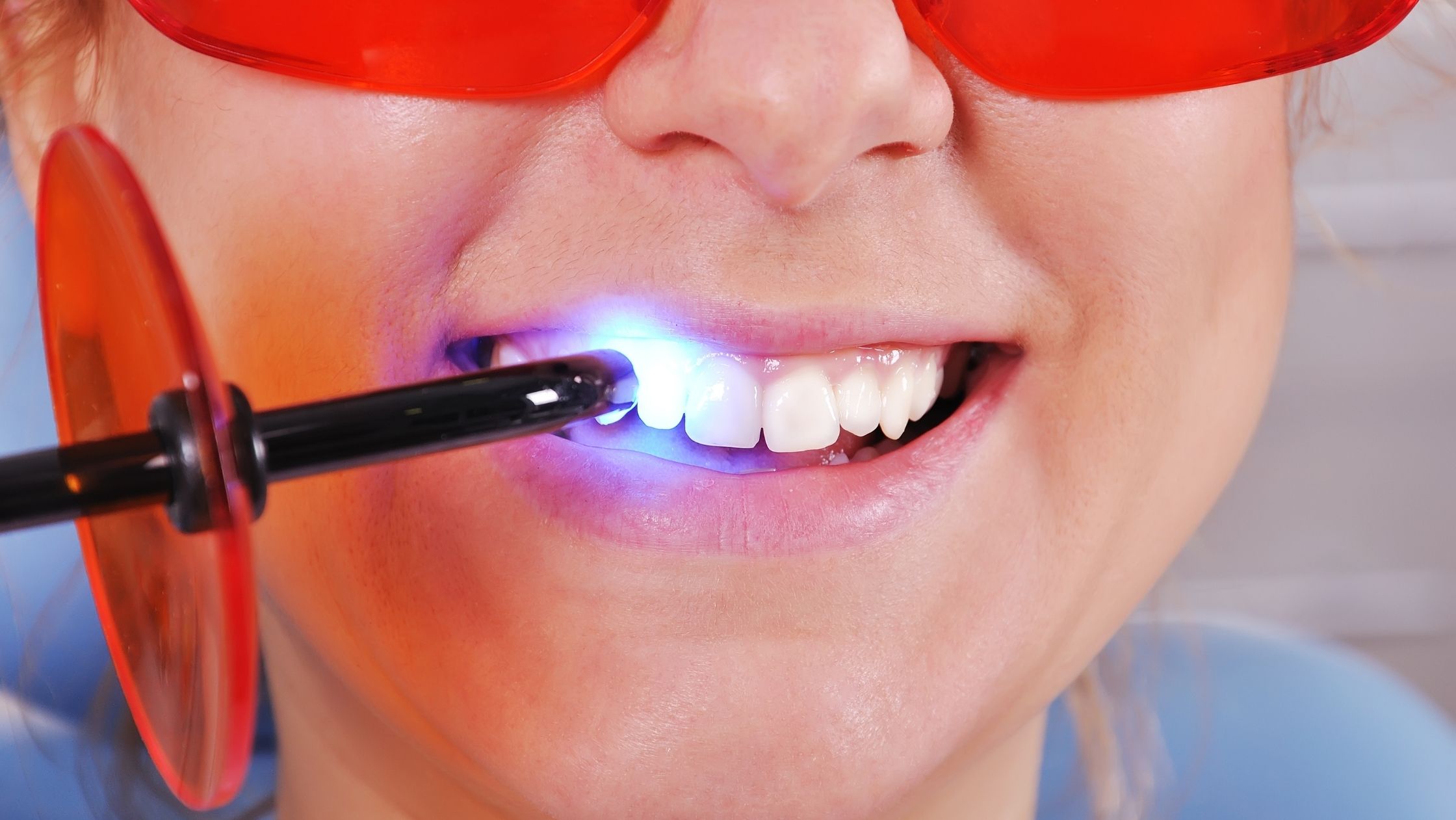
The filling is then shaped to restore the shape of the tooth and then cured with light for hardening before checking the bite and ensuring that the restoration is comfortable.  The tooth is then contoured and polished.

After the Filling Procedure

The patients are usually advised not to eat or drink for 2–3 hours after the procedure. 

Some people may experience some sensitivity in the area for a few days following the procedure.

However, if one experiences any pain or if the filling does not feel right, the dentist must be consulted as soon as possible.

What are the Types of Tooth Coloured Dental Fillings?

When it comes to choosing the right type of dental filling for a cavity, patients now have several options.

Currently, most people opt for tooth-coloured fillings for a more discreet result. However, in certain situations, a metal filling may be the more appropriate choice.

A dentist can help patients make the most appropriate selection based on age, dental history and the location of the affected tooth.

Tooth-Coloured Materials

Filling the decayed tooth using a tooth-coloured material, results in a more natural-looking and less noticeable appearance.

This option is preferred by most patients especially while receiving routine dental care for decay towards the front of the mouth.

These materials can be even enjoyed in the back of the mouth if the decay is not too drastic. 

Tooth-coloured fillings can be made of: 

  • Porcelain or ceramic
  • Resin composite which is a combination of porcelain and plastic
  • Glass ionomer which is a combination of acrylic and glass, infused with fluoride

Porcelain and resin composite are usually used on exposed tooth areas, while glass ionomer fillings are generally used to treat decay below the gum line.

A popular choice among dentists and patients, Composite Fillings can be easily accommodated to match the natural shade of the patient’s teeth. 

Also Read: Things to Know About Dental Cleaning: Benefits, Risks Types and Treatment

What are the Advantages of Tooth Coloured Fillings?

1. Quick Treatment

The procedure of the tooth coloured filling is quick and painless and takes less than an hour to fill one or two cavities. 

At Kirkland Premier Dentistry Dr Sheena Gaur is quite adept with these fillings and works as efficiently as possible to limit the amount of actual treatment time.

In most cases, a filling can be placed, cured and polished in about 15 to 20/minutes after the anaesthesia sets in.

2. Aesthetically Appealing

Tooth-coloured fillings easily blend in with the surrounding tooth structure making it unnoticeable and only white sparkling teeth visible, unlike the silver amalgam and gold fillings. 

3. Long Lasting

The tooth-coloured fillings could last for 10 years or more if proper care of teeth, gums, and fillings is taken.

Dr Sheena Gaur explains that Brushing twice a day, flossing daily, getting a dental examination and cleaning every six months can go a long way in protecting the fillings.  

4. Leaves More Healthy Tooth Structure Intact

As the composite resin that is used in tooth-coloured fillings bonds to the teeth, there is the least need to remove as much natural tooth structure, as is needed with silver amalgam or gold fillings, allowing more conservatively treatment of the cavity and maintaining more of the natural tooth structure.

5. Mercury-Free

Some amount of Mercury, which is a toxic material, is present in Silver amalgam fillings.

Though it is very low and not considered dangerous to health, many patients prefer a mercury-free option, such as tooth-coloured fillings.

How Long Do Composite Fillings Last?

Composite fillings can last around 10 years if the fillings are well taken care of. However, someone at very high risk for cavities may not get that many years out of a composite filling.

Porcelain fillings, which can also be tinted for a near-natural finish can last between 10 and 15 years in a healthy adult.

What is the Cost of Tooth Coloured Fillings?

The cost of a composite resin filling depends on many factors. It is a non-invasive procedure which can easily be performed under local anaesthesia but if the patient is affected by dental anxieties or a strong gag reflex, dental sedation might be needed and it can increase the cost.

It is always cheaper to treat a cavity with filling on time than to neglect the problem till the time it gets worse.

Afterword

Most adults deal with cavity treatment at some point in life and tooth-coloured filling options can help make the work appear more natural.

They have many benefits, the biggest being preserving your smile and bite with a completely natural look!

Dr Sheena Gaur at Kirkland Premier dentistry has a wide experience in treating tooth decay and cavities and can offer expert guidance in helping patients make an appropriate choice according to the condition, placement and amount of decay!

For sparkling, white and healthy teeth book an appointment today.

we'd love to hear from you