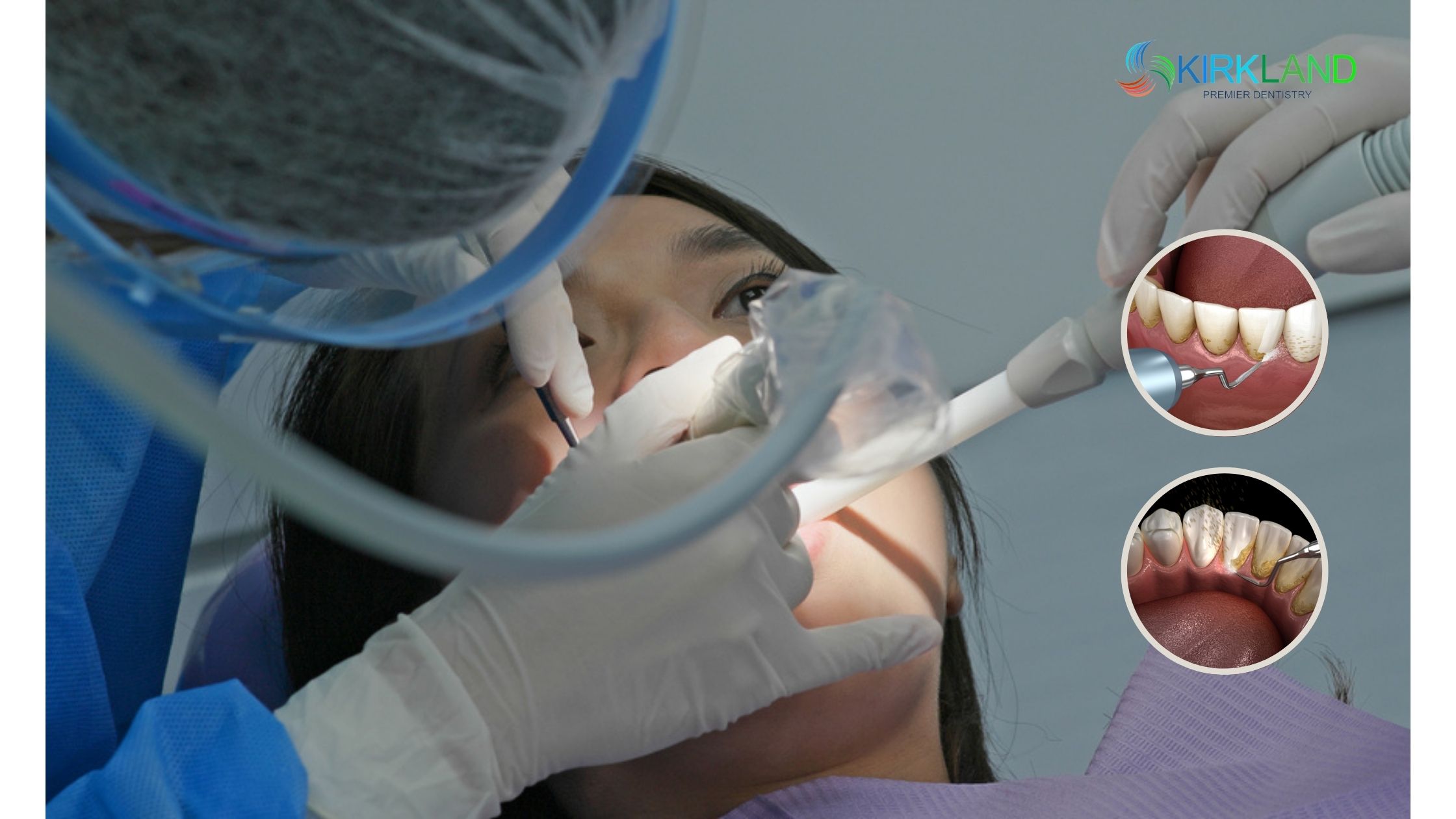
What are Tooth Scaling and Root Planing?
Periodontal or teeth scaling and root planing are popular dental procedures that help to treat gum disease or periodontitis and excessive plaque buildup.
This procedure is more in-depth than regular teeth cleaning.
Scaling is a type of dental cleaning that reaches below the gum line to remove plaque buildup.
The dentists may usually recommend teeth scaling and root planing together. More commonly, both these procedures are known as “deep dental cleaning“.
The procedure often takes more than one dental visit and may require a local anesthetic depending on the severity of the chronic periodontal disease and if one has receding gums.
It usually takes only a few days to recover from this outpatient procedure but sometimes it may take longer.
When Do You Need Teeth Scaling and Root Planing?
Teeth scaling and root planing are recommended if your mouth has signs of chronic periodontal disease as it can help to stop the harmful effects of this condition, keeping the mouth healthy.
A severe infection or inflammation of the tissues that surround your teeth, Gum disease is caused by plaque that continuously forms on the teeth.
The bacteria that builds upon the teeth, as a result, can transform into tartar (dental calculus).
Chronic periodontal disease is caused by this bacteria in plaque that makes your gums pull away from your teeth, creating large pockets to grow between the teeth and gums.
There is also a chance of more bacteria growing there that one cannot reach with teeth brushing at home.
If not treated on time, chronic periodontal disease can lead to:
- Reddening, swelling, and bleeding of gums
- bone and tissue loss
- tooth loss
- loose teeth
- moving teeth
Chronic periodontal disease affects many adults over the age of 30. Some of the reasons that lead to the development of this condition include:
- poor dental hygiene
- smoking
- aging
- hormonal changes
- poor nutrition
- family history
- other medical conditions
However, gum disease can be prevented with proper teeth and gum care and regular dental visits. It is very important to floss regularly to reach spots that toothbrushes can’t.
However, if you have pockets of 4 millimeters or more, you will probably be recommended dental scaling to remove the plaque beneath the gum line in order to treat the gum disease.
What Happens During Teeth Scaling and Root Planing?
Teeth scaling and root planing are outpatient procedures and can be done in the dentist’s office.
However, one or more appointments for the procedure may be needed depending on the severity of the condition.
A local anesthetic is sometimes used to numb the area and reduce the discomfort of the procedure depending on the condition.
The teeth scaling is first conducted which involves scraping the plaque and dental tartar from the teeth and from below the gum line from any large pockets that might have developed between the teeth and gums.
The next step is root planing. The dentist after removing plaque planes or smooths out the rough surfaces on the roots of your teeth uses a scaling tool. This procedure helps the gums to reattach to your teeth.
Additional treatment may also be recommended depending on the health of the teeth and gums.
Some antimicrobial agents may be used in your mouth by the dentist or you may be prescribed oral antibiotics to be taken for several days to ensure faster healing.
Periodontal scaling and root planing may take more than one dental visit depending on the condition of the teeth. A post-procedure checkup might be needed after the treatment.
There are two basic methods for scaling teeth:
- Traditional handheld metal tools, including a scalar and a curette, may be used to perform the procedure. This thin tool will be inserted beneath the gum line to access plaque your toothbrush can’t reach.
- Alternatively, an ultrasonic instrument may be used by the dentist to scale your teeth. This includes a vibrating metal tip combined with a cool water spray. The tip works on chipping the tartar away as the water flushes out the pocket.
See also: How Often Should You Get Teeth Scaling Done?
What to Expect After the Procedure?
The treatment of Teeth scaling and root planing may take more than one trip to the dentist’s office and the dentist will most likely recommend a follow-up appointment to ensure the procedure was successful and that there are no complications like an infection.
Also if the pockets do not shrink with the procedure, you may be recommended to come back for another procedure.
Dr. Sheena Gaur at Kirkland Premier Dentistry says that it is advisable to resume normal oral care procedures after your teeth scaling and root planing, like brushing your teeth at least twice a day and flossing regularly.
Eating a healthy, balanced diet and seeing your dentist for regular cleanings to prevent the condition from returning are also recommended.
A periodontal maintenance cleaning schedule i.e. returning for regular cleanings every three to four months versus the standard cleanings every six months may also be advised based on your condition.
What Are the Benefits of Teeth Scaling and Root Planing?
Considered to be the gold standard treatment for chronic periodontal disease, teeth Scaling and root planing are known to improve the pocket gap between teeth and gums.
Reducing the pockets that develop between the teeth and gums through teeth scaling and root planing, can help to reduce the risk of experiencing tooth, bone, and tissue loss which are known to be linked with chronic periodontal disease.
What Are Scaling and Root Planing Risks?
Teeth scaling carries minimal risks. There is a slight risk of infection following the procedure, so an antibiotic or a special mouthwash may be prescribed by your dentist for a few days or weeks.
There is also a slight chance of harmful bacteria being introduced into your bloodstream during Dental scaling and root planing which can lead to bacteremia or blood infection.
A mouth rinse or antibiotics is prescribed to prevent infection and help you heal if such is the case.
Your gums can feel painful for a few days and the teeth may be sensitive for up to a week.
There may also be some bleeding, swelling, or tenderness of the gums right after the treatment.
When to Call the Dentist?
Though Teeth Scaling and Root Planing are very safe procedures with minimal risk, one must be cautious of the following signs and must contact the dentist immediately after experiencing these:
- worsening pain
- the area doesn’t heal as expected
- fever
However, any side effects of the procedure should clear up within a few weeks.
Takeaway
Dental scaling and root planing is a very common treatment for patients, to treat chronic periodontal disease.
It can be performed as an outpatient procedure at the dentist’s office with or without local anesthesia.
Scheduling dental scaling when your dentist recommends it, can help fight unseen plaque and maintain a cleaner mouth and you must not hesitate to schedule deep cleaning too if your dentist recommends.
More than one appointment may be needed to complete the procedure and you may experience mild side effects following the procedure for a few days or a week.
However, this treatment will go a long way in giving you a fresher smile and healthy gums.
If you feel that your teeth might need deep cleaning, do book an appointment with Dr. Sheena Gaur at Kirkland Premier Dentistry.